AI Is Supercharging Drug Development. The Tech is Slashing Early Research Costs and Timelines by Up to 70%
Researchers can now use sophisticated computational models to simulate biological processes and predict how compounds interact with the human body.

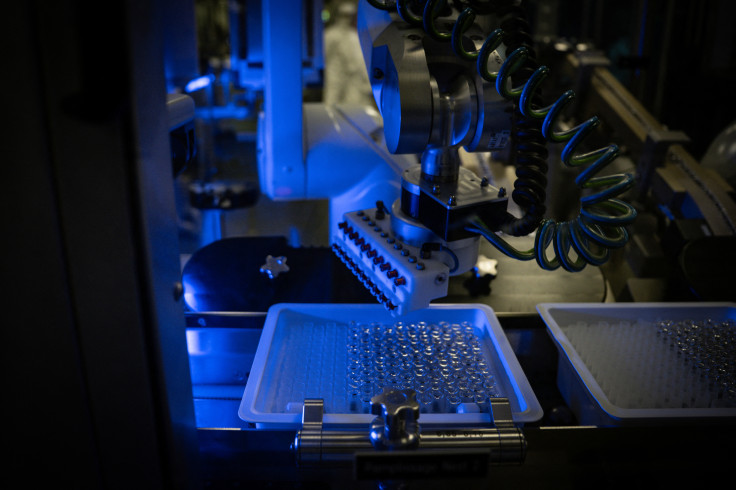
Artificial intelligence is rapidly transforming the pharmaceutical industry, dramatically reducing the time and cost required to develop new medicines before they ever reach human testing, according to a new survey.
A proprietary survey conducted by investment bank TD Cowen and reported by Axios found that AI-powered tools are cutting preclinical drug development costs and timelines by as much as 70%.
The survey, which included responses from 80 biopharma executives and industry insiders, points to growing investment in advanced software, genomic sequencing technologies and predictive computer models that could significantly expand the number of experimental therapies entering development over the next several years.
"The goal is to create more shots on goal," Brendan Smith, director of life sciences equity research at TD Cowen, told Axios, explaining that AI allows companies to generate massive amounts of research data while improving the odds that promising drug candidates ultimately succeed in clinical trials.
Rather than relying exclusively on laboratory experiments, researchers can now use sophisticated computational models to simulate biological processes and predict how compounds interact with the human body. These "in silico" platforms also help scientists estimate potential side effects long before laboratory testing begins.
While AI can dramatically accelerate research, experts caution that it cannot replace scientific judgment or laboratory validation. Human researchers still play a critical role in interpreting results and confirming findings through traditional "wet lab" experiments.
The growing adoption of AI also aligns with broader policy changes. The Trump administration has pushed federal agencies to reduce animal testing in biomedical research, encouraging greater use of computational models. Those policy shifts are expected to further increase demand for predictive technologies that can estimate how drugs will behave without relying as heavily on animal studies.
According to the survey, software capable of modeling biological systems, predicting drug-to-drug interactions and optimizing medication dosing for vulnerable populations, including pregnant women and newborns, represents one of the fastest-growing segments of the life sciences technology market through 2028.
The investment opportunity is significant. The report estimates that pharmaceutical companies could increase new drug development programs by more than 10% over the next three to five years. Increased spending on AI platforms, laboratory infrastructure and supporting technologies could generate roughly $1 billion in additional industry investment during that period.
No drug discovered primarily through artificial intelligence has yet received approval from the U.S. Food and Drug Administration. Some investors and scientists remain skeptical that AI alone can predict how highly diverse human populations will respond to new treatments.
Although algorithms can optimize chemical compounds and identify promising drug targets, critics argue they still struggle to fully account for the biological complexity found in real-world patients. As a result, many analysts believe the industry's historically high clinical failure rate, estimated at roughly 90%, may not decline substantially without major advances in how AI models incorporate human biology.
Competition from overseas also continues to intensify. China's rapidly expanding biotechnology sector is attracting billions of dollars in investment by offering lower research costs and faster turnaround times, creating additional pressure on U.S. pharmaceutical companies to accelerate innovation through AI-driven tools.
© Copyright IBTimes 2026. All rights reserved.
- Recommended For You