Iran Faced Some Of America’s Toughest Sanctions. Yet $9 Billion In Iranian Funds Still Moved Through U.S. Banks
Tehran has relied on foreign banks, shell companies, oil sales and cryptocurrency to maintain access to the global financial system.


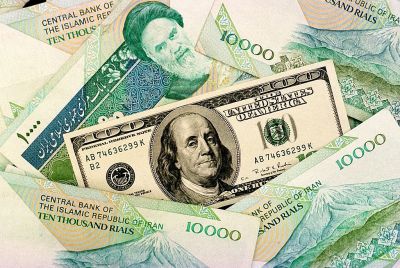
About $9 billion in potential Iranian shadow-banking activity passed through U.S. correspondent accounts in 2024, showing how money connected to Tehran continued moving through the American financial system despite years of sanctions designed to restrict Iran's access to dollars.
The transactions were identified by the U.S. Treasury's Financial Crimes Enforcement Network through reports filed by American financial institutions. Foreign shell companies accounted for about $5 billion of the activity, while dozens of foreign oil companies that appeared to be Iranian front companies transacted roughly $4 billion, FinCEN said in an analysis of the 2024 activity.
Iranian entities do not necessarily need accounts directly with American banks to gain access to the dollar system. Foreign financial institutions maintain correspondent accounts with U.S. banks to settle international transactions, allowing funds to pass through the American banking system even when the underlying parties are based elsewhere. Iranian networks have used intermediaries and front companies to obscure the origin of transactions before they reach U.S. institutions, The Wall Street Journal reported.
Those networks extend through financial centers including the United Arab Emirates, Hong Kong and Singapore. They include exchange houses as well as oil, shipping, investment and technology companies that transact with each other and with outside businesses, some of which may not know they are dealing with an Iranian-linked entity, according to FinCEN.
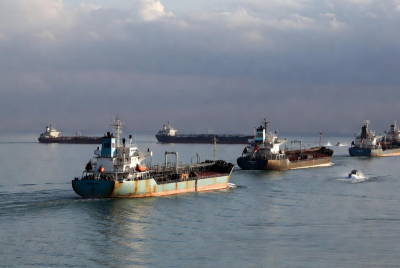
Oil has long been central to the system. Iran continued selling crude despite U.S. sanctions by relying on intermediaries, a shadow fleet of tankers and ship-to-ship transfers, with China emerging as its main remaining customer. The trade has become significantly more difficult during the current U.S.-Iran conflict.
A U.S. naval blockade reinstated on July 14 has stopped fresh Iranian crude cargoes from reaching China through the Strait of Hormuz. Iranian crude and condensate loadings dropped to roughly 220,000 to 255,000 barrels a day in August from about 2 million barrels a day in March, Reuters reported, citing estimates from Kpler and Vortexa. Tehran has instead been selling oil already held in floating storage in Asian waters.
China remains central to Iran's oil trade. Before the blockade tightened supplies, Chinese buyers took more than 80% of Iran's seaborne oil, while Kpler estimated imports at roughly 534,000 barrels a day in August, down sharply from an average of 1.4 million barrels a day in 2025.
Iran has also increasingly used cryptocurrency as an alternative channel for moving money outside traditional banking networks. Crypto activity involving Iran reached an estimated $8 billion to $10 billion in 2025, with U.S. authorities examining whether digital-asset platforms helped Iranian officials and sanctioned entities circumvent financial restrictions, Reuters reported in February. Researchers differed over how much of the activity was linked to the Iranian state rather than ordinary Iranians using crypto as the rial weakened.
A separate Reuters investigation published in July detailed a $4 billion sanctions-evasion network linked to an unlicensed Dubai crypto exchange called Shelbit and more than 2,000 Farsi-language gambling websites. Investigators found connections between wallets used by the network and Iran's central bank, as well as wallets linked to the Islamic Revolutionary Guard Corps.
Washington has stepped up its effort to disrupt those financial channels during the current conflict. In August, the Trump administration expanded the scope of potential secondary sanctions to include digital assets, gold, technology, aviation and shipping and sanctioned 60 individuals, entities and vessels as part of a campaign it calls Operation Economic Outcast, Reuters reported.
The Treasury has also targeted individual banks. On Aug. 28, FinCEN proposed cutting the UAE branch of Egypt's Banque Misr off from U.S. correspondent banking, saying the branch had processed billions of dollars in suspicious transactions connected to Iranian shadow-banking networks. Treasury said its analysis identified about $1.8 billion in suspected Iranian shadow-banking activity involving Banque Misr UAE between 2023 and 2025.
The financial crackdown comes against the backdrop of the continuing U.S.-Iran conflict, which has disrupted energy shipments through the Strait of Hormuz and sharply reduced Tehran's ability to export fresh crude. Shipping through the strait fell again over the weekend after U.S. forces struck three Iranian oil tankers and Iranian forces targeted U.S. vessels and other tankers, Reuters reported Sunday.
Iran nevertheless retains access to international financial channels through the network of intermediaries built during years of sanctions. The Treasury's analysis of the 2024 transactions showed that shell companies alone moved about $5 billion through U.S. correspondent accounts, while oil-linked front companies accounted for billions more.
© Copyright IBTimes 2026. All rights reserved.
- Recommended For You