Saudi Arabia Scrambles to Avoid Red Sea Attacks. Oil Flows Through Egypt Soar.
The shift comes after Iran-aligned Houthi forces in Yemen declared a maritime embargo on Saudi Arabia.


Saudi Arabia is dramatically increasing oil exports through Egypt and the Mediterranean as escalating security threats in the Red Sea force the kingdom to rethink how it moves crude to global markets.
Oil exports from Egypt's Mediterranean port of Sidi Kerir have more than doubled in August, reaching about 2.3 million barrels per day compared with roughly 1 million bpd in July, according to Kpler data cited by CNBC. The majority of those barrels are Saudi crude, signaling what analysts say is a significant shift in Riyadh's export strategy.
"This isn't a short-term decision," Matt Smith, director of commodity research at Kpler, told CNBC. "This is a distinct change in strategy or dynamics." The shift comes after Iran-aligned Houthi forces in Yemen declared a maritime embargo on Saudi Arabia on July 20 and threatened Saudi-linked shipping.
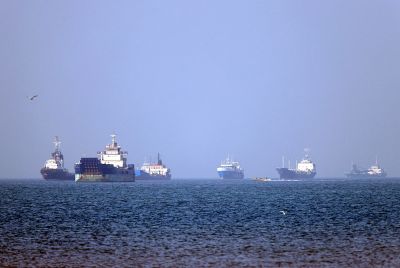
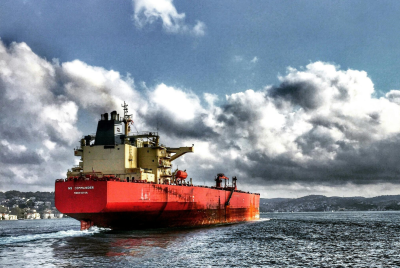
Saudi crude flows are increasingly moving north through Egypt's SUMED pipeline as tankers seek to avoid the Bab el-Mandeb Strait. Crude loadings at Sidi Kerir had climbed to a record 2.17 million bpd, with roughly 90% consisting of Saudi crude.
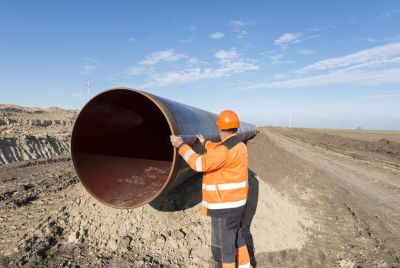
The SUMED pipeline connects Ain Sokhna on Egypt's Red Sea coast with Sidi Kerir on the Mediterranean. The route is particularly important for fully loaded Very Large Crude Carriers, or VLCCs, which cannot simply make the entire Suez Canal transit with their full cargo.
Instead, tankers can unload part of their crude at Ain Sokhna, send those barrels through SUMED and then collect the oil again at Sidi Kerir after transiting the canal. Kpler estimates the SUMED pipeline has an operational capacity of roughly 2.5 million barrels per day.
When combined with cargo-splitting operations involving large tankers, the system could theoretically allow as much as 3.4 million bpd of Saudi crude to bypass the Bab el-Mandeb route.
The strategy illustrates how Saudi Arabia is being squeezed by security risks at two of the world's most important oil chokepoints. Earlier this year, Riyadh redirected millions of barrels from its eastern oil-producing region through the kingdom's East-West Pipeline to Yanbu on the Red Sea as traffic through the Strait of Hormuz became increasingly constrained.
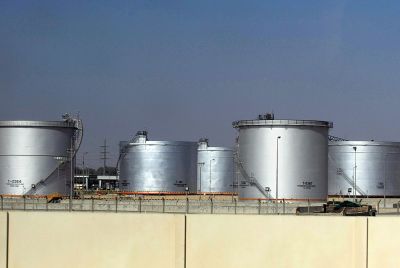
Saudi Aramco CEO Amin Nasser said in May that the East-West Pipeline had reached its maximum capacity of 7 million bpd and had become a critical supply route during the disruption.
Now the southern Red Sea is presenting another problem. Saudi exports from Yanbu through the Bab el-Mandeb plunged nearly 90%, to about 1.3 million barrels during the week of Aug. 3 from 11 million barrels in the week of July 20, according to the Kpler data cited by CNBC.
Some Saudi tankers have also been traveling with their tracking transponders switched off, making the precise scale of the decline difficult to determine. Reuters reported that the practice has become increasingly common as operators attempt to reduce their exposure to possible attacks.
"It is a big dislocation that is happening here," Smith said. "It's clear that the Saudis are not taking this lightly, and they're expecting it to be a new trend." Aramco has publicly emphasized that it has alternatives.
During the company's Aug. 4 earnings call, Nasser pointed to "multiple access routes and alternative pathways" that allow Saudi crude to reach the Mediterranean through SUMED and the Suez Canal. Aramco's investor calendar confirms the company reported its first-half results on Aug. 4.
But rerouting comes with a cost, particularly for Saudi Arabia's crucial Asian customers. Avoiding Bab el-Mandeb can require tankers to make the much longer voyage around Africa, adding about 25 days to the journey, according to Nasser.
That appears to be reshaping global trade patterns. Smith said most barrels leaving Sidi Kerir are now heading toward Europe and the United States rather than Asia, potentially pushing crude from other regions toward Asian buyers instead.
"We're getting a domino effect here," Smith said. The Mediterranean route is not immune to the widening security risks. On July 30, unidentified drones struck two liquefied natural gas vessels at Egypt's Damietta port.
© Copyright IBTimes 2026. All rights reserved.
- Recommended For You